If you spend a few days in almost any Vietnamese town, you will see it: two people bent over a board on a low plastic stool, a small crowd standing around them, someone holding a glass of iced tea, someone else pointing and arguing. The game is cờ tướng — xiangqi — and in Vietnam it is not a niche hobby. It is part of street life.
This article describes what the game looks like in everyday Vietnam, what to expect if you want to play, and why the way Vietnamese people play it is a good introduction to the game for anyone.
The name
In Vietnamese the game is called cờ tướng. Cờ means a board game, and tướng means the general — so the name is roughly "the general's game". International chess is cờ vua, "the king's game". The difference is easy to remember: one game has a king, the other a general.
The pieces usually carry Chinese characters, as in China, even though Vietnamese is written in the Latin alphabet today. Most regular players learn to recognise the characters by shape, and the Vietnamese names of the pieces — Tướng, Sĩ, Tượng, Xe, Pháo, Mã, Tốt — come from Sino-Vietnamese words. See Vietnamese xiangqi words for the vocabulary.
Where people play
On the sidewalk
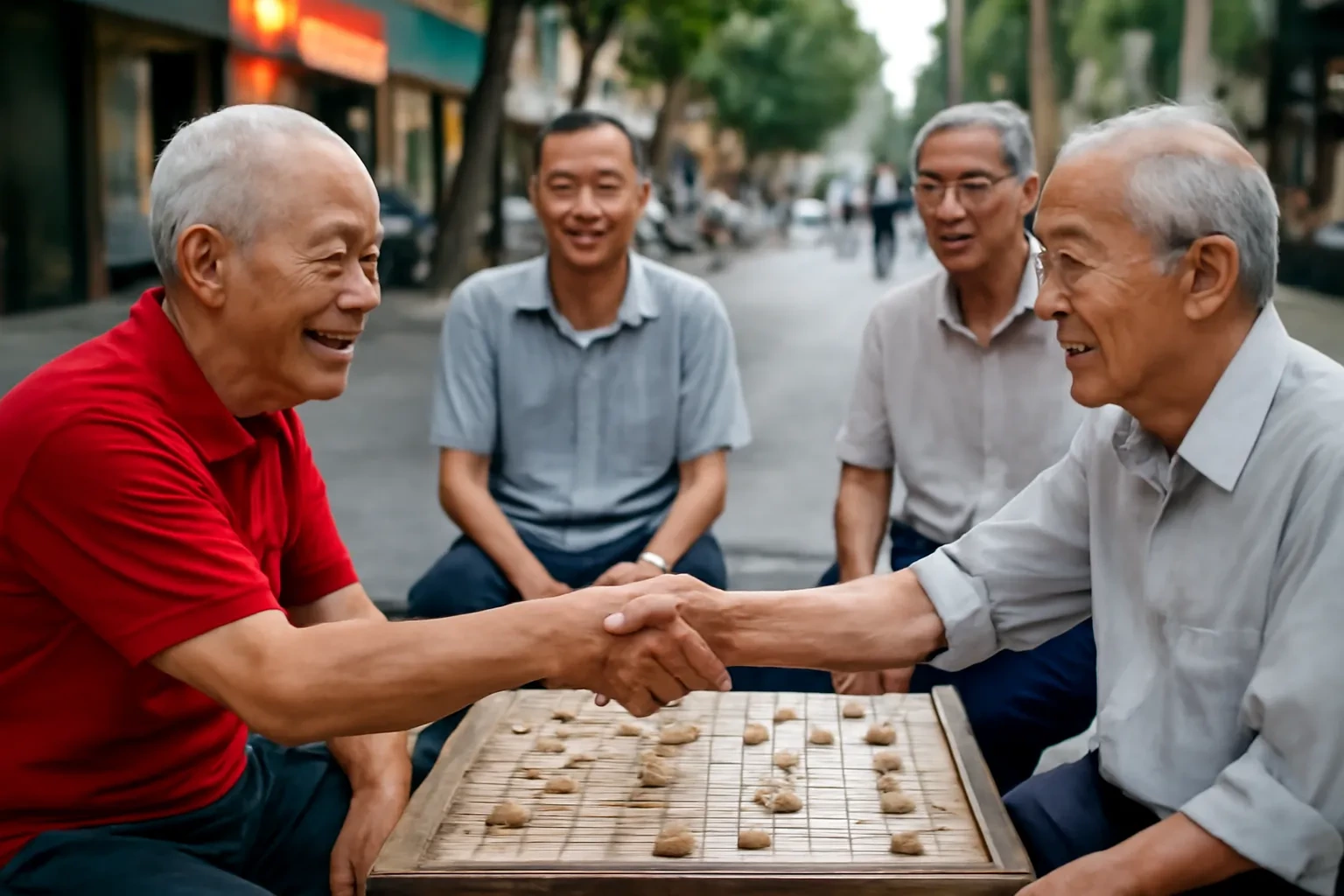
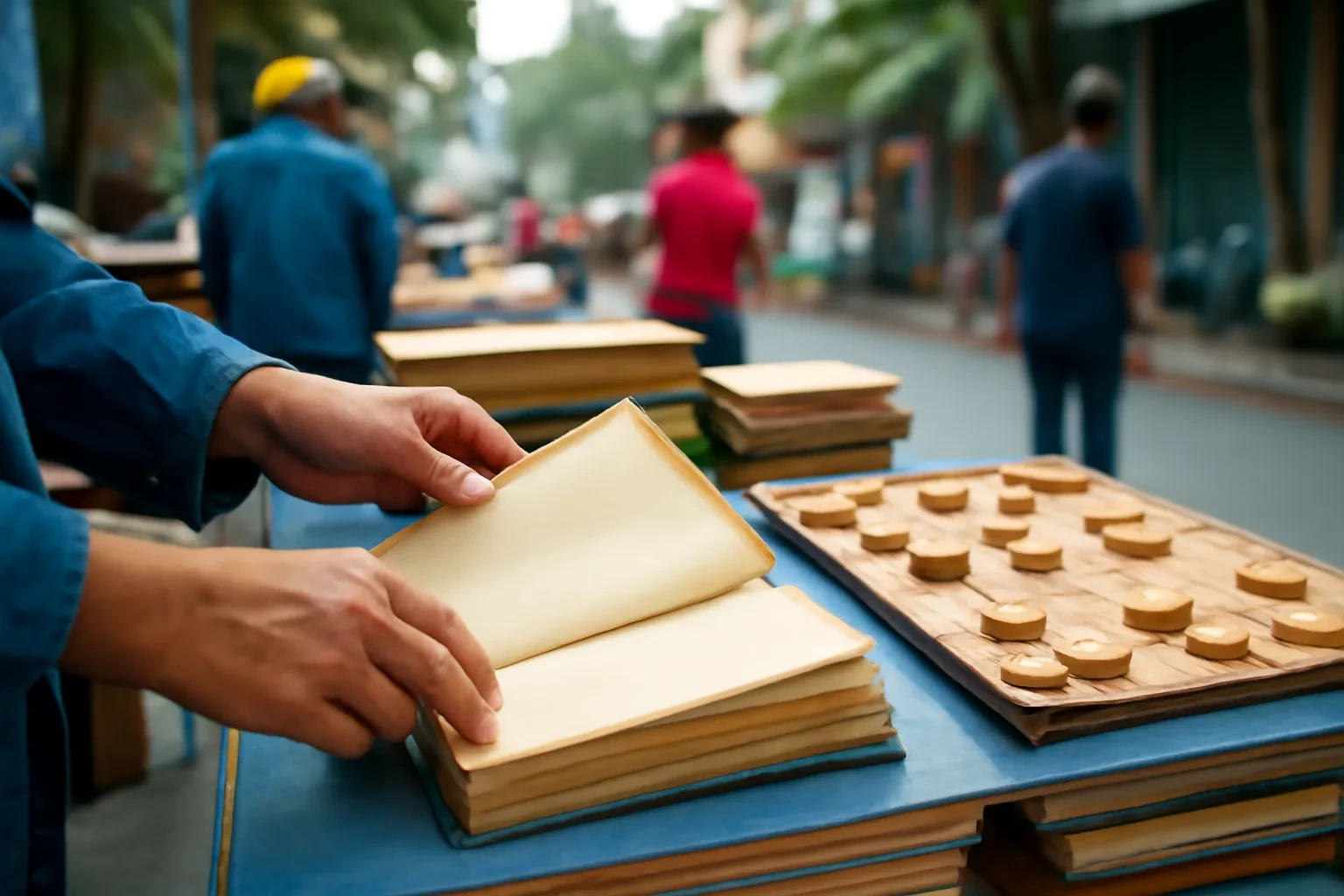
The most typical scene is a sidewalk game: a board on a small table or a stool, two players on even smaller stools, often next to a street vendor or a tiny café. Sets are cheap and portable, and a sidewalk is available to anyone. Games are fast, loud and social.
In cafés
Many Vietnamese cafés — especially the small neighbourhood ones with plastic chairs — are places where regulars bring a board or find one waiting. A pot of tea or a glass of coffee lasts a whole afternoon of games. The café is a meeting point, and the board is often the reason people come.
In parks and courtyards
In the mornings and evenings, parks fill with people exercising, and there is usually a corner where older players gather around boards. Apartment block courtyards and the ground floors of shared buildings see the same thing.
At home
For many families, the xiangqi board is a normal part of home life. Grandparents teach grandchildren, and a game after a family meal is a common sight during holidays.
At festivals
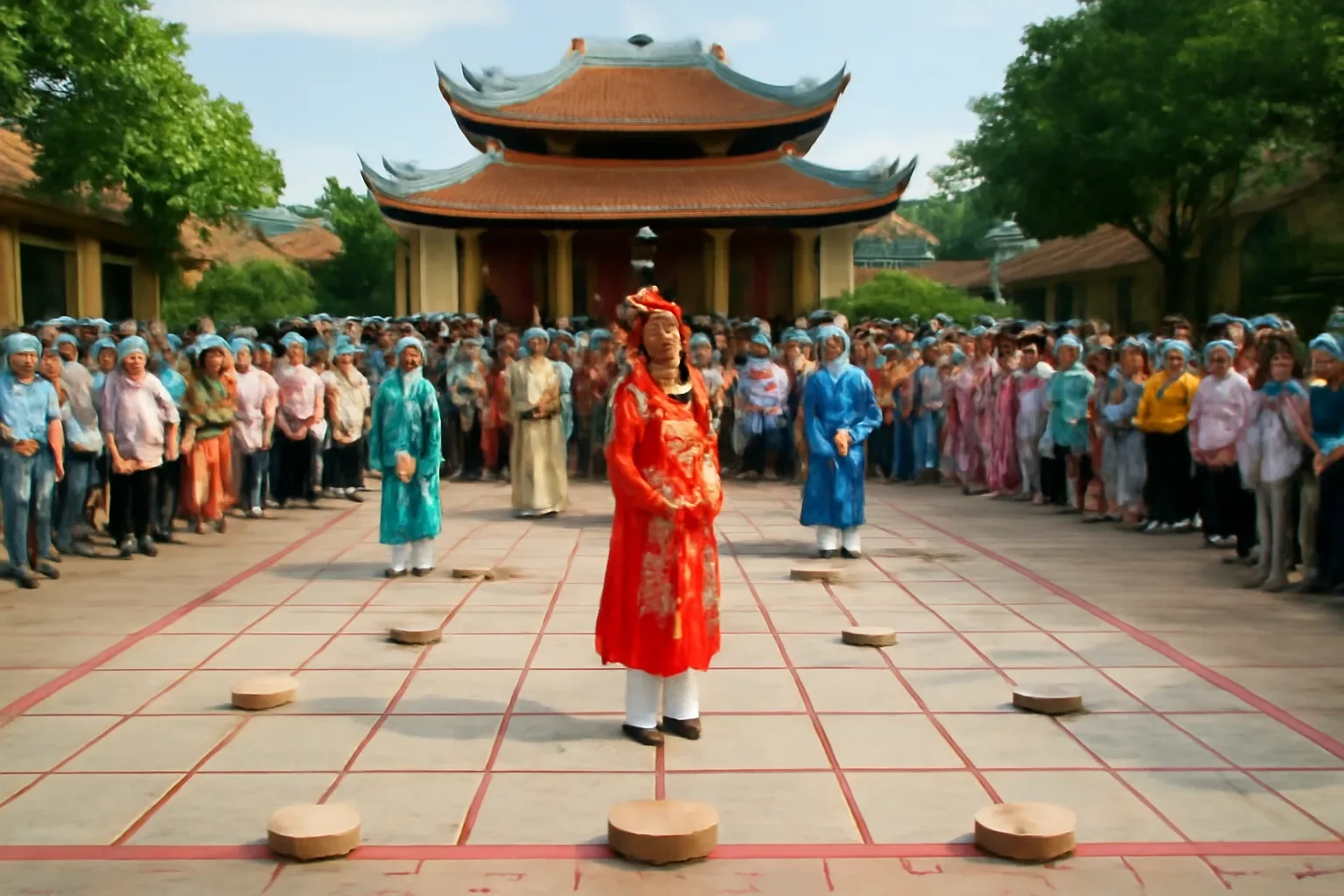
During the spring festival season, some festivals and events stage cờ người — "human chess" — with people in costume standing in as pieces on a giant board. It is more ceremony than competition, but it shows how deeply the game is woven into traditional culture. See human xiangqi at Vietnamese festivals.
The crowd
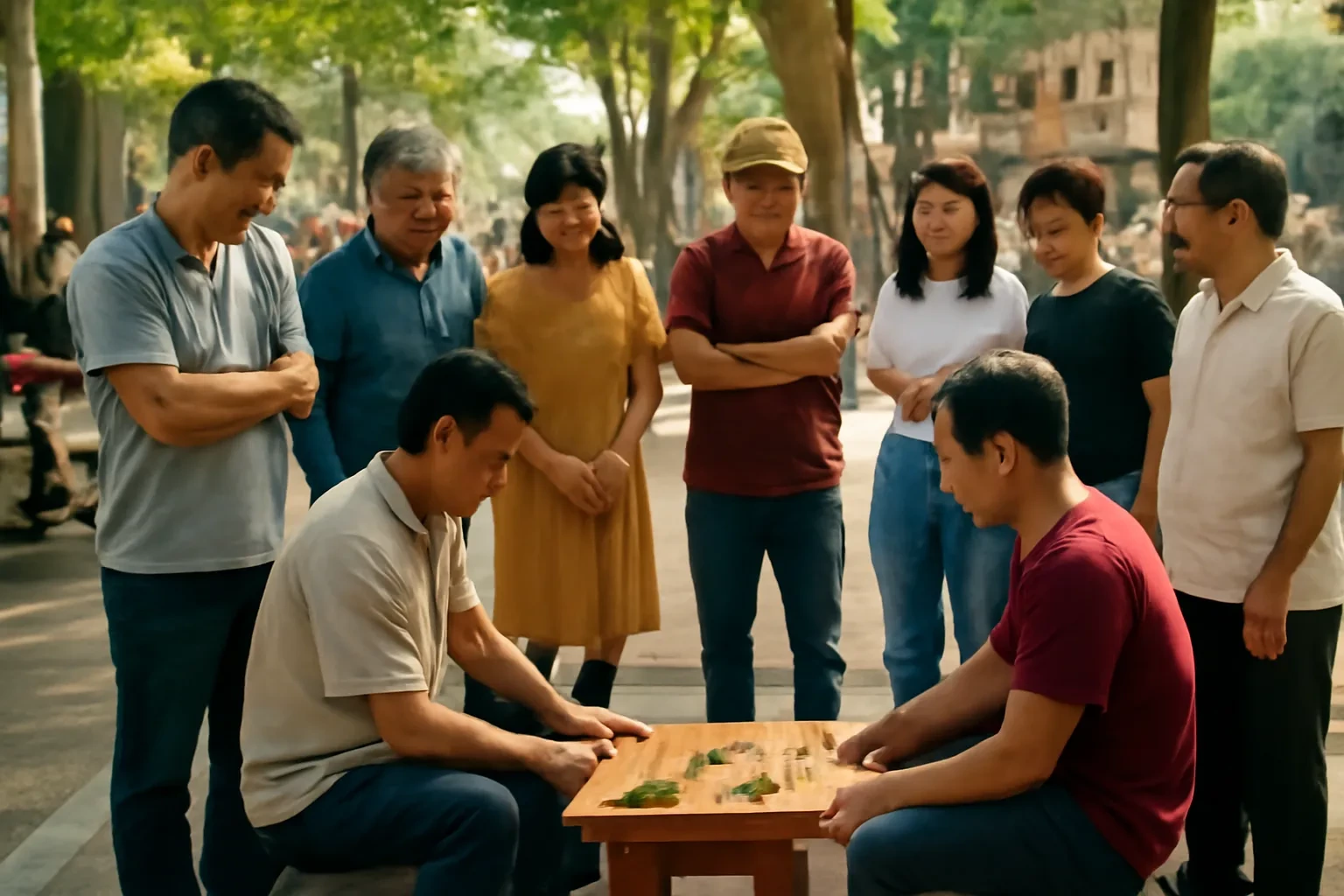
The most distinctive thing about Vietnamese xiangqi is the crowd. A sidewalk game rarely has only two participants. Onlookers gather, comment, groan at mistakes and sometimes suggest moves — which is technically bad manners, and Vietnamese has a teasing name for such backseat advisers: quân sư quạt mo, roughly "a strategist with a palm-leaf fan". See xiangqi etiquette in Vietnam for what is and isn't acceptable.
For a visitor, the crowd is also the easiest way in. Stand and watch quietly for a while, and you will often be invited to play the winner.
Street problems: cờ thế
In some cities you may see a different kind of set-up: a board with a composed endgame position on it and a person inviting passers-by to play one side. These are cờ thế — composed problems. They look simple but are designed with hidden resources, and they are sometimes played for small stakes. Enjoy them as puzzles, but be aware that the person running the board knows the position far better than you do.
Joining a game as a visitor
A few practical tips:
- Learn the rules first. Nobody minds a beginner, but players do expect you to know how the pieces move. Our guide xiangqi for chess players covers what you need.
- Watch before you ask. Spend a few minutes watching and the players will usually notice you.
- Don't comment on other people's games. However tempting.
- Accept the result gracefully. You will probably lose your first games against sidewalk regulars. They have played thousands of games.
- Learn a few words. Chiếu (check) and thua (I lose) go a long way. See Vietnamese xiangqi words.
Why the Vietnamese style is a good teacher
Sidewalk games are fast and tactical. Players rarely think for long; they rely on pattern recognition — the double cannon mate, the horse and chariot mate and a handful of standard openings. That makes watching them an excellent education in the patterns that matter most.
If you cannot be in Vietnam, you can still play the same kind of fast, pattern-rich games online at /online, or practise against the computer on the home board.
Who plays
It is tempting to picture only retired men in parks, and they are certainly the most visible players. But the game is played much more widely: students on campus steps, motorbike taxi drivers waiting for customers, office workers at lunch, grandparents with grandchildren at home. Schools and clubs also teach it to children. For many Vietnamese people, cờ tướng is simply a normal way to pass time with friends, like cards or football.
What a sidewalk game feels like
Games are usually fast — often only a few seconds per move in the opening — and there is rarely a clock. Pieces are placed firmly, sometimes with a satisfying slap on the board when giving check. Players talk, tease and complain. A game might be over in ten minutes, and the loser gets up to let the next challenger sit down. It is informal, social and competitive at the same time.
The same patterns, online
The fast, tactical style of Vietnamese street play translates well to short online games. If you enjoy it, try the 3+2 or 5+3 time controls on /online: quick enough to feel like a sidewalk game, long enough to think in the critical moments.
Frequently asked questions
What is xiangqi called in Vietnam?
Cờ tướng, meaning "the general's game". International chess is called cờ vua.
Is xiangqi popular in Vietnam?
Yes. It is played widely on sidewalks, in cafés, in parks and at home, by people of all ages.
Can a foreign visitor join a street game?
Often, yes. Watch quietly first, know the rules, and you will usually be welcome to play.
Do Vietnamese xiangqi pieces use Chinese characters?
Usually, yes. Regular players recognise the characters by shape, while the spoken names of the pieces are Vietnamese.
What is cờ thế?
Composed endgame problems set up on a board, sometimes on the street, where passers-by are invited to try their luck. They are trickier than they look.