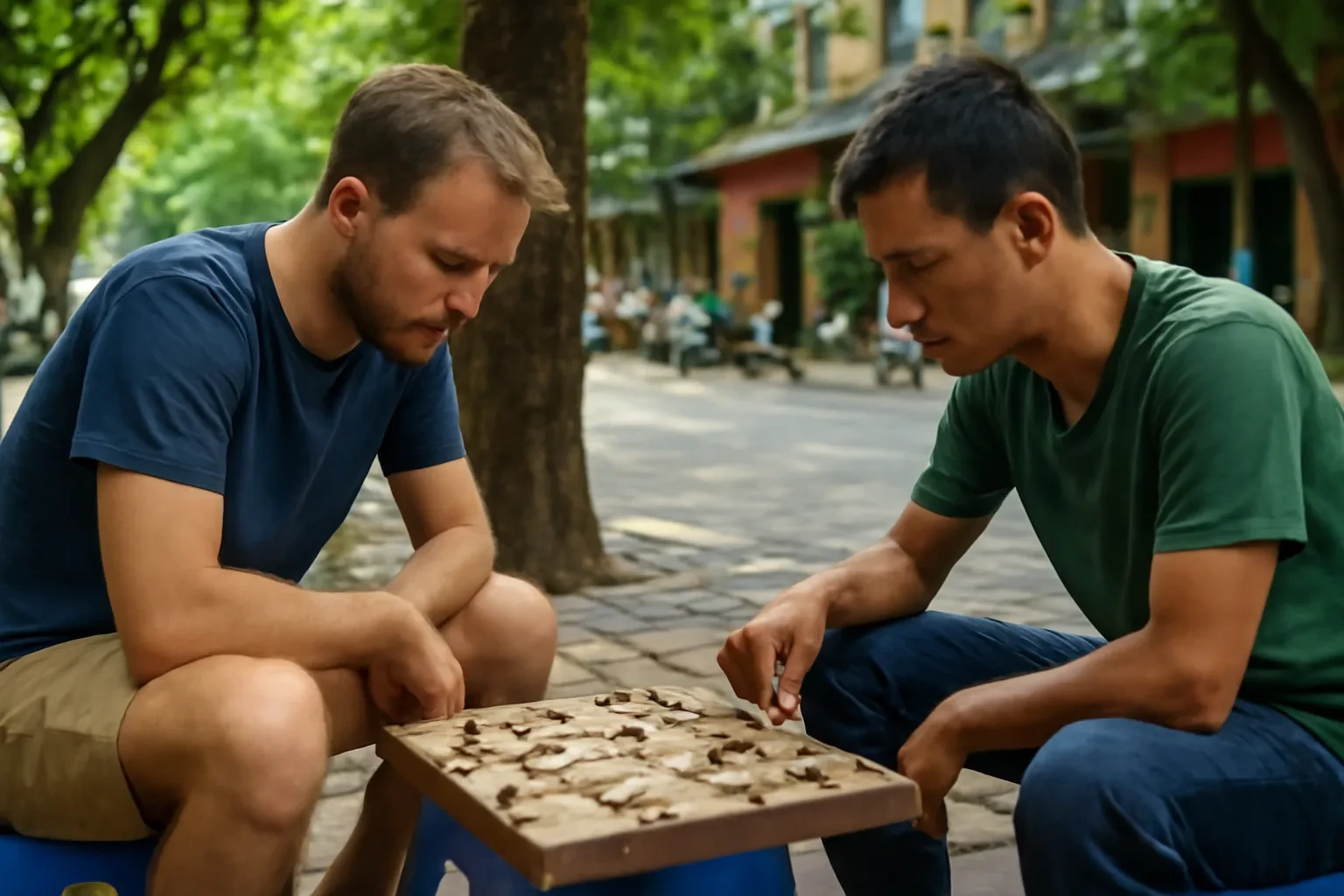
If you play international chess, xiangqi will feel familiar within ten minutes and strange for the next ten games. The familiar part is real: both games grew from the same ancestor, both are about attacking a king-like piece, and most of the thinking skills you have built — calculation, pattern recognition, planning — transfer directly. The strange part is also real: a handful of rules change what is safe and what is dangerous, and chess instincts will mislead you until you adjust them.
This guide is for exactly that adjustment period.
What carries over almost unchanged
- Calculation. Checking candidate moves, looking at checks, captures and threats first, visualising a few moves ahead: all identical.
- Tactics in general. Forks, pins, discovered attacks and overloaded defenders exist in xiangqi. The geometry is different, but the ideas are the same.
- Development. Get your pieces out, especially the strong ones, before launching an attack.
- King safety. The general must be protected, and most games are decided by an attack on it.
- Endgame thinking. Counting material, knowing which endings win and which draw, activating every piece.
What changes, piece by piece
| Xiangqi piece | Closest chess piece | Key difference |
|---|---|---|
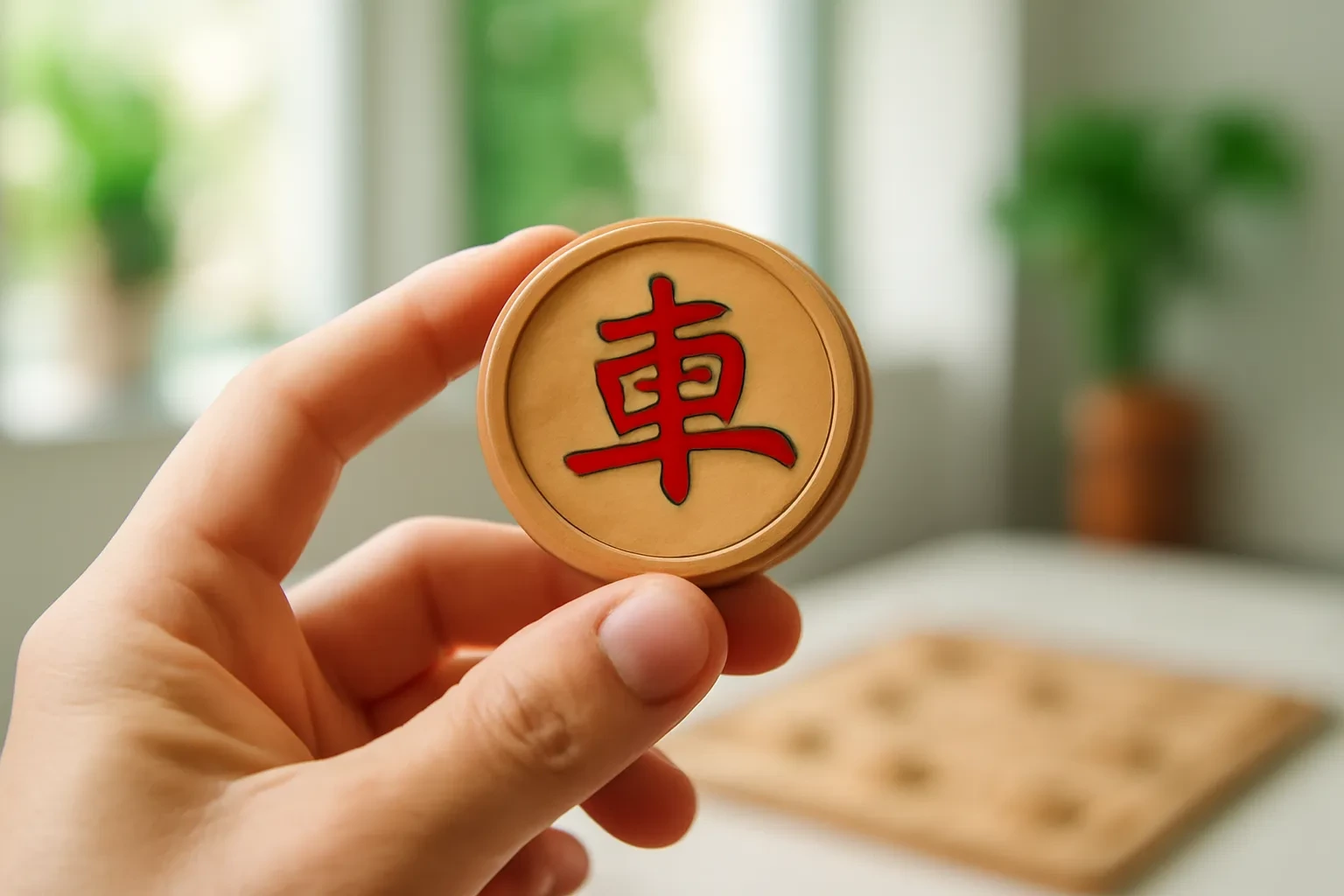
| Chariot (R, Xe) | Rook | Almost identical, and the strongest piece in xiangqi. |
| Horse (H, Mã) | Knight | Can be blocked by a piece next to it (the "horse leg"). |
| Cannon (C, Pháo) | none | Moves like a rook, but captures by jumping over exactly one piece. |
| Elephant (E, Tượng) | Bishop, sort of | Moves exactly two points diagonally, cannot cross the river, can be blocked. |
| Advisor (A, Sĩ) | none | Moves one point diagonally, never leaves the palace. |
| General (K, Tướng) | King | Moves one point orthogonally, never leaves the palace. |
| Soldier (P, Tốt) | Pawn | Moves straight forward, sideways after the river, never promotes. |
There is no queen. The chariot is the heavy piece, and there are two per side.
For a closer look at relative strength, see xiangqi piece values.
The five habits you need to change
1. "The king is safe at home"
In xiangqi, the general never leaves a nine-point palace, and its own advisors often block its escape. Mates happen in the middlegame far more often than in chess. Treat every enemy horse and cannon near your palace as a real danger. See smothered mates in xiangqi.
2. "Stalemate saves me"
It does not. In xiangqi, a player with no legal move loses. Many endgames that are drawn in chess are wins here. Read stalemate is a loss.
3. "Pieces between my king and the enemy only defend"
In xiangqi, a piece between your general and an enemy cannon can be the cannon's screen, enabling a check instead of preventing it. Count the pieces on each line; one piece in between is danger, not safety. See the cannon explained.
4. "My king can't help until the endgame"
Your general controls its entire file, because the generals may not face each other with nothing between them. Moving it sideways inside the palace is a powerful attacking idea even in the middlegame. See flying general mates.
5. "Pawns become queens"
Soldiers never promote, and a soldier that reaches the last rank can only move sideways — it is weaker there, not stronger. Soldiers matter, but in a different way. See soldier endgames.
The board
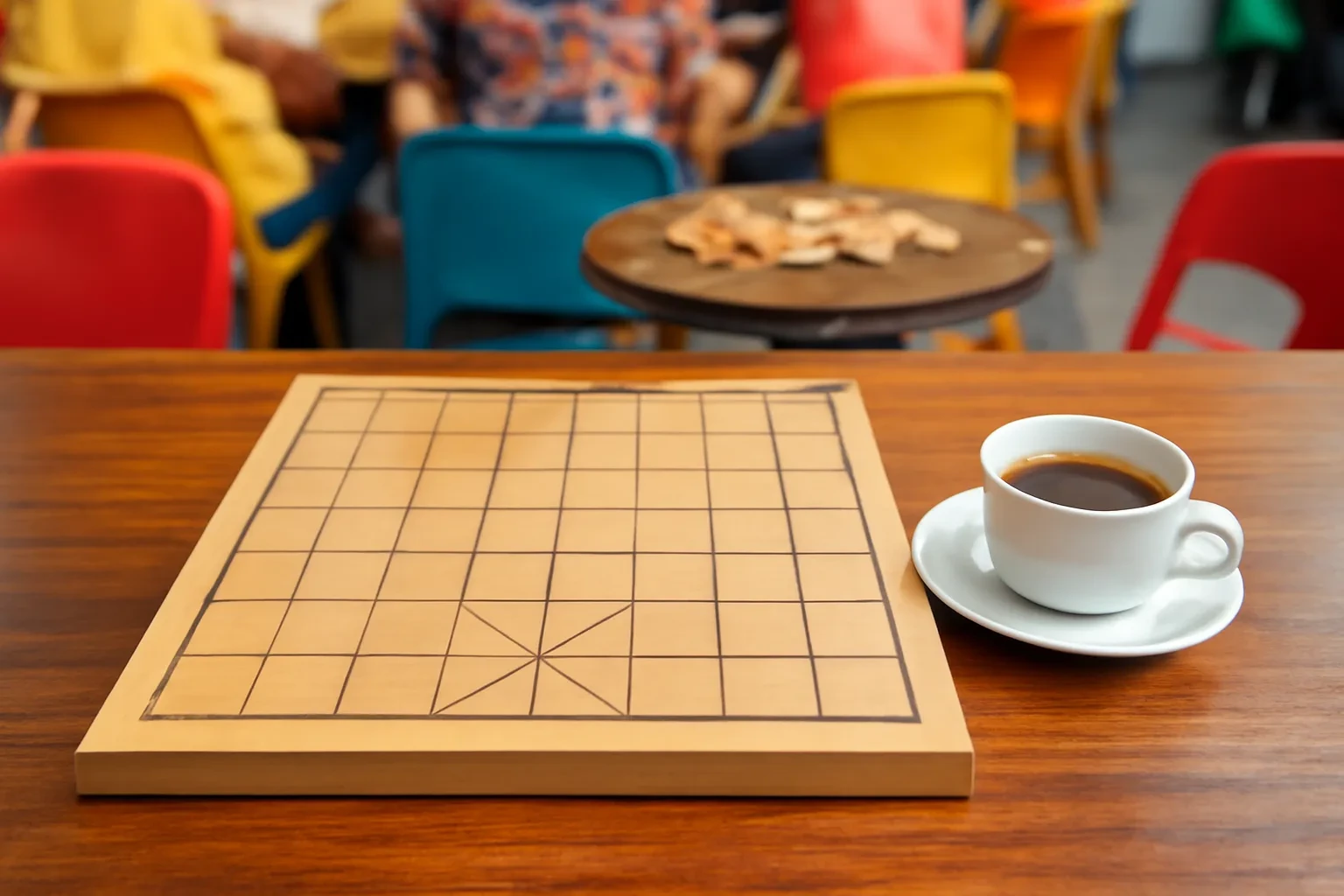
Xiangqi is played on the intersections of lines, not in squares: nine files and ten ranks. A horizontal gap in the middle — the river — divides the two halves. Each side has a palace, a three-by-three area marked with diagonal lines, where the general and advisors live. More in the river and the palace.
Notation
International sources use WXF notation, which describes a move by piece, file, direction and destination: C2=5 means "cannon on file 2 moves sideways to file 5", H8+7 means "horse on file 8 moves forward to file 7". Files are counted from each player's own right-hand side. Vietnamese books use a very similar system with different letters, explained in Vietnamese notation vs WXF.
A two-week plan
Days 1–3: rules until they are automatic. Play slow games against the computer at the easiest level on the home board. The site will only let you make legal moves, which quietly teaches you the horse leg, the elephant eye and the cannon screen.
Days 4–7: one opening. Learn the central cannon (C2=5) as Red and one standard answer as Black. You do not need theory; you need a reasonable set-up you can play without thinking.
Days 8–10: mating patterns. Study the double cannon mate, the horse and chariot mate and the iron bolt mate. These three appear in a huge number of games.
Days 11–14: basic endgames and real opponents. Learn the chariot endgame, then start playing people on /online with a slow time control such as 10+5.
Traps chess players fall into
Chess players make a predictable set of mistakes in their first games: moving an elephant across the river (illegal), expecting a horse to jump over a blocker (it cannot), leaving a piece where it becomes a cannon's screen, and walking the general onto the enemy general's file. We collected the most common ones in traps for chess players.
What stays the same in spirit
It is worth ending on the similarities. In both games, the player who develops faster, keeps the king or general safe, and calculates carefully usually wins. In both games, most games between club players are decided by a tactical mistake rather than deep strategy. And in both games, reviewing your own losses is the fastest way to improve. The rules are different; the habits of a good player are not.
Frequently asked questions
Is xiangqi harder than chess?
Neither is objectively harder. Xiangqi games are often sharper and more tactical in the middlegame; chess has a longer strategic tradition in the West. Chess players usually become competent at xiangqi quickly.
Which xiangqi piece is most like the queen?
None. The chariot is the strongest piece and behaves like a rook. There are two chariots per side.
Does being good at chess help in xiangqi?
Yes. Calculation, tactics and planning transfer directly. The main work is learning the new rules and unlearning a few chess instincts.
Why is it called Vietnamese chess?
In Vietnam the game is called cờ tướng, "the general's game", and it is played everywhere — in parks, cafés and on sidewalks. English speakers visiting Vietnam often meet it under the name Vietnamese chess.
How long does it take a chess player to learn the rules?
Most chess players know the rules after one or two games. Playing them without mistakes takes a week or two of regular games.