Every chess player learns early that stalemate saves lost positions. A king with no legal move that is not in check means the game is drawn, and many swindles depend on it. In xiangqi, that safety net does not exist. A player who has no legal move loses, whether or not the general is in check.
This single rule changes endgames more than any other difference between the two games. It turns many chess draws into xiangqi wins, and it makes weak pieces like the horse and the soldier much more dangerous late in the game.
The rule
At your turn, if you cannot make any legal move, you lose the game. It does not matter whether:
- your general is in check (checkmate), or
- your general is not in check but every move is illegal (what chess would call stalemate).
Vietnamese players sometimes distinguish the two in speech — chiếu bí for checkmate, hết nước for "out of moves" — but the result is the same: a loss.
A picture
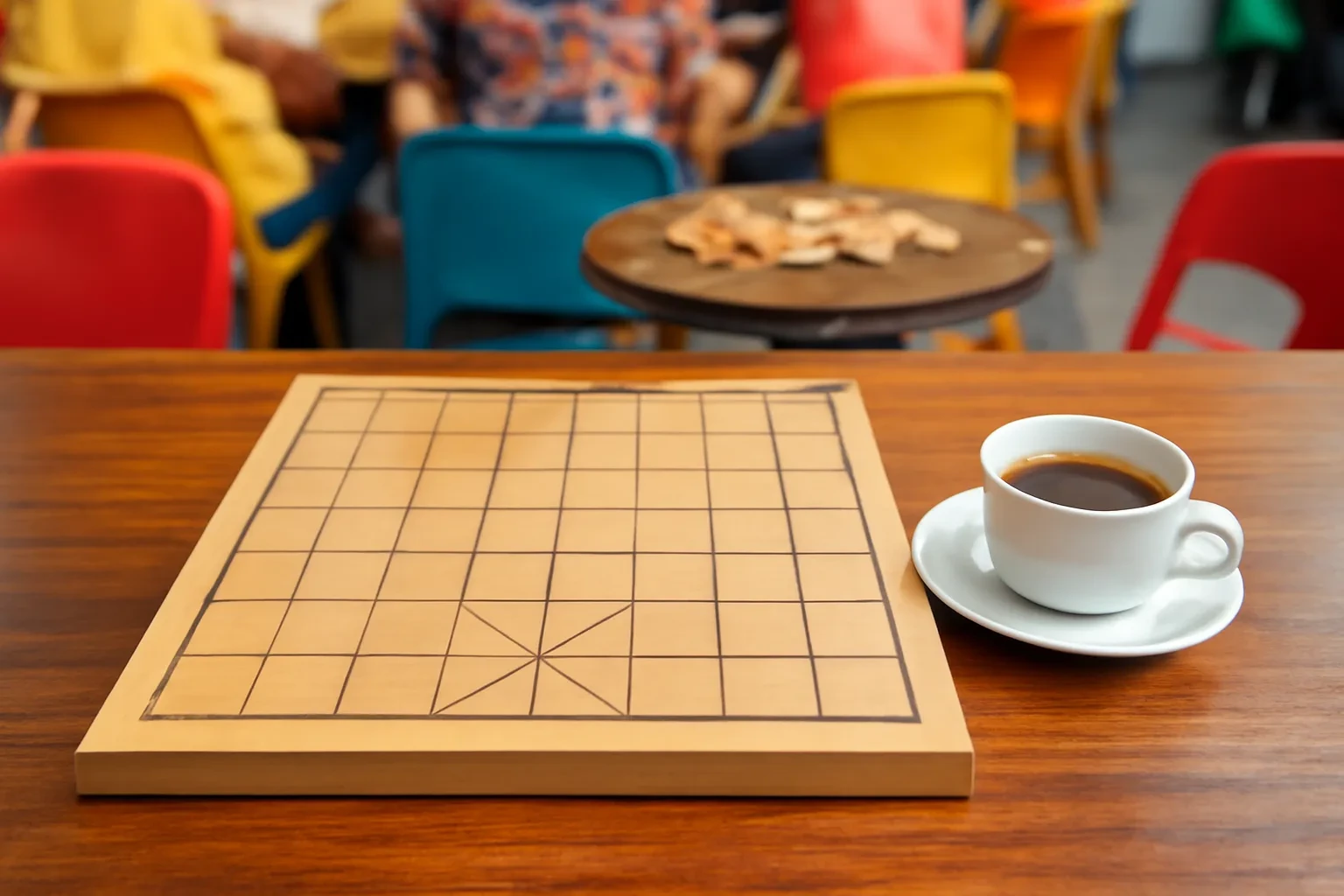
The black general has only two points it could reach: forward, and to the centre. The chariot takes one, the red general — from the far side of the board, through the rule that generals may not face each other — takes the other. Black is not in check, but Black cannot move, so Black loses.
Why it matters so much
In chess, an attacker with a small advantage must often avoid stalemate tricks, and many endings with little material are drawn because the defending king cannot be forced into a mating net without stalemating it first.
In xiangqi, the attacker's job is simpler: take away every move. Combined with the tiny palace and the power of your own general along its file, this means:
- A horse and general beat a bare general. A horse can never attack two neighbouring points, so it cannot build a mating net alone — but it does not need to. See horse endgames.
- A single soldier and general beat a bare general, as long as the soldier has not already run to the last rank. See soldier endgames.
- Defenders can be squeezed. A defender whose advisors and elephants have no safe move may be forced to make a weakening one — or have no move at all.
Other draw rules, briefly
Since stalemate is gone, how do xiangqi games end in a draw?
- By agreement. Players can agree to a draw. On this site, you can offer a draw during an online game at /online.
- By repetition. Under the official Asian rules, perpetual checking and perpetual chasing are forbidden: the side doing them must change its moves or lose. The rules for other repetitions are detailed and technical. On this site, to keep things simple, a position that repeats three times is scored as a draw.
- By insufficient material. When neither side has any attacking piece left — no chariot, horse, cannon or soldier — neither side can win, and the game is drawn. This site scores that automatically.
How to use the rule as the attacker
- Before you check, count the defender's legal moves. Sometimes a quiet move that takes away the last free point wins faster than any check.
- Use your general. Moving it to the file next to the centre removes a whole file from the enemy general.
- Freeze the defenders. Advisors and elephants that must stay where they are to prevent mate cannot also provide waiting moves.
How to avoid losing to it as the defender
- Keep a spare move. An elephant that can shuffle between two protected points is often worth keeping precisely for this.
- Don't lock your own general in. Two advisors on the back rank next to the general leave it one flight square. If that square is covered, you are close to having no moves at all.
- Don't trade your last free piece. In a bad endgame, the piece that can still move freely is sometimes the only thing standing between you and a loss.
A mindset shift for chess players
Chess players are trained to see stalemate as a defensive resource and an attacking danger. In xiangqi, flip it: running out of moves is a danger for the defender and a target for the attacker. The moment you internalise this, many endgames you thought were drawn become wins, and many "safe" defensive set-ups start to look fragile.
Practise it
- Set up the diagram above on a physical board. Remove the red general and notice that the black general now has a legal move to the centre.
- In endgames against the computer on the home board, try deliberately to win by leaving the enemy general with no move instead of checkmating it.
- Read xiangqi for chess players and traps for chess players for the other differences.
The no-move rule and your defenders
The rule cuts both ways. Defenders who rely on a fortress of advisors and elephants must make sure that fortress still has spare moves. An elephant that can step back and forth between two protected points is often the piece that keeps a drawn position drawn: without it, the defender might have to move an advisor out of place, or have nothing to move at all.
This is also why experienced defenders are reluctant to push soldiers in a bad endgame. A soldier that can still advance is a spare move in reserve; a soldier that has already advanced is one less.
A quick exercise
Set up any endgame from your recent games on a physical board, and for the defending side count the legal moves. Then, for each attacking move you consider, count again. You will be surprised how often the attacker's best move is the one that reduces the defender's count to zero rather than the one that gives check.
Frequently asked questions
Is there stalemate in xiangqi?
No. A player with no legal move loses, whether in check or not.
Is "no legal move" really common in practice?
Yes, especially in endgames. The general's palace is tiny and your own general controls a whole file, so running out of moves happens far more often than in chess.
Can a horse alone win because of this rule?
A horse together with its general can beat a bare general, largely because of this rule. Against a full set of advisors and elephants, a lone horse usually cannot.
How do draws happen in xiangqi then?
By agreement, by certain repetitions, and when neither side has any attacking pieces left.
How does this site handle repetition?
A position repeated three times is scored as a draw. Official competition rules on perpetual check and chasing are more detailed.