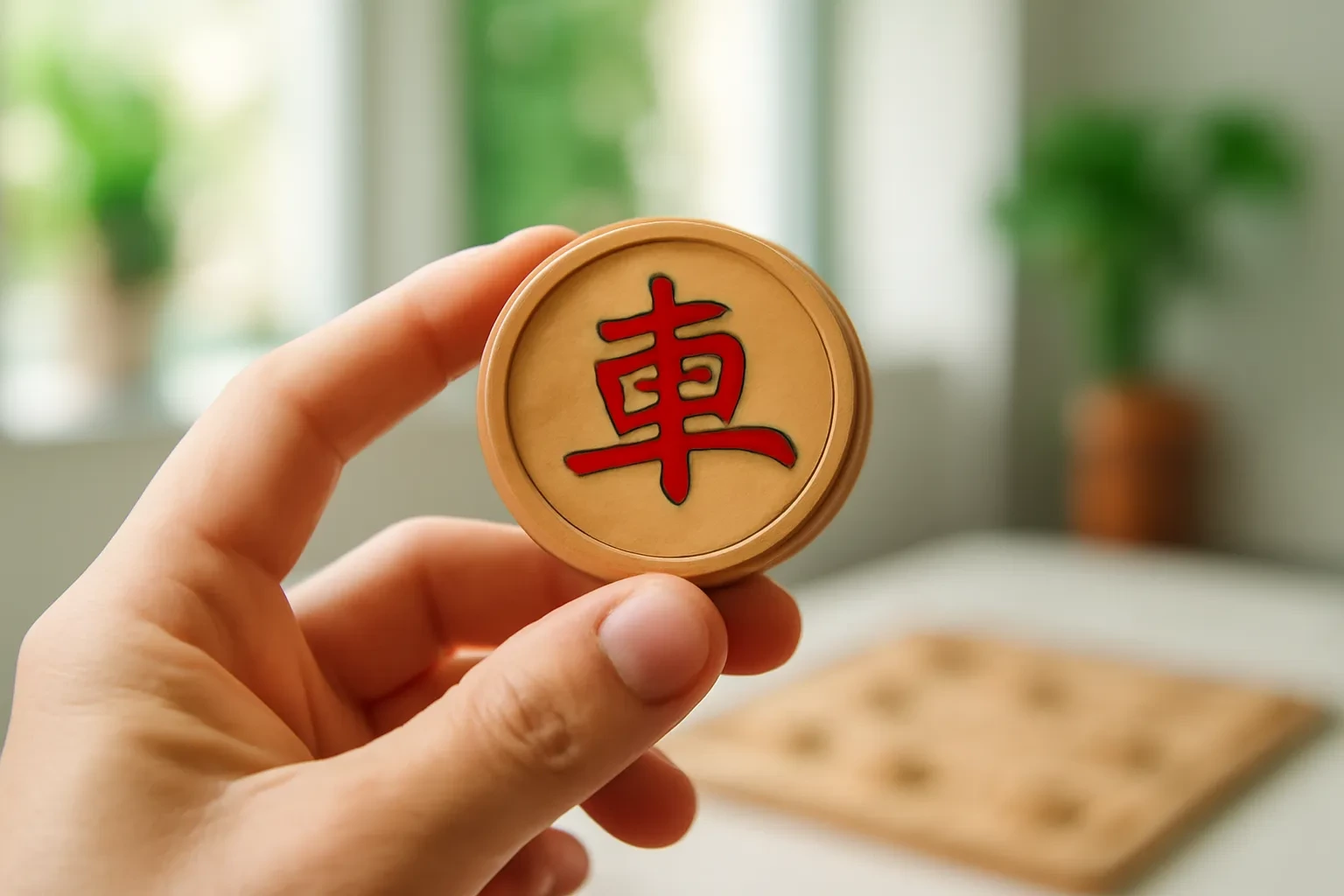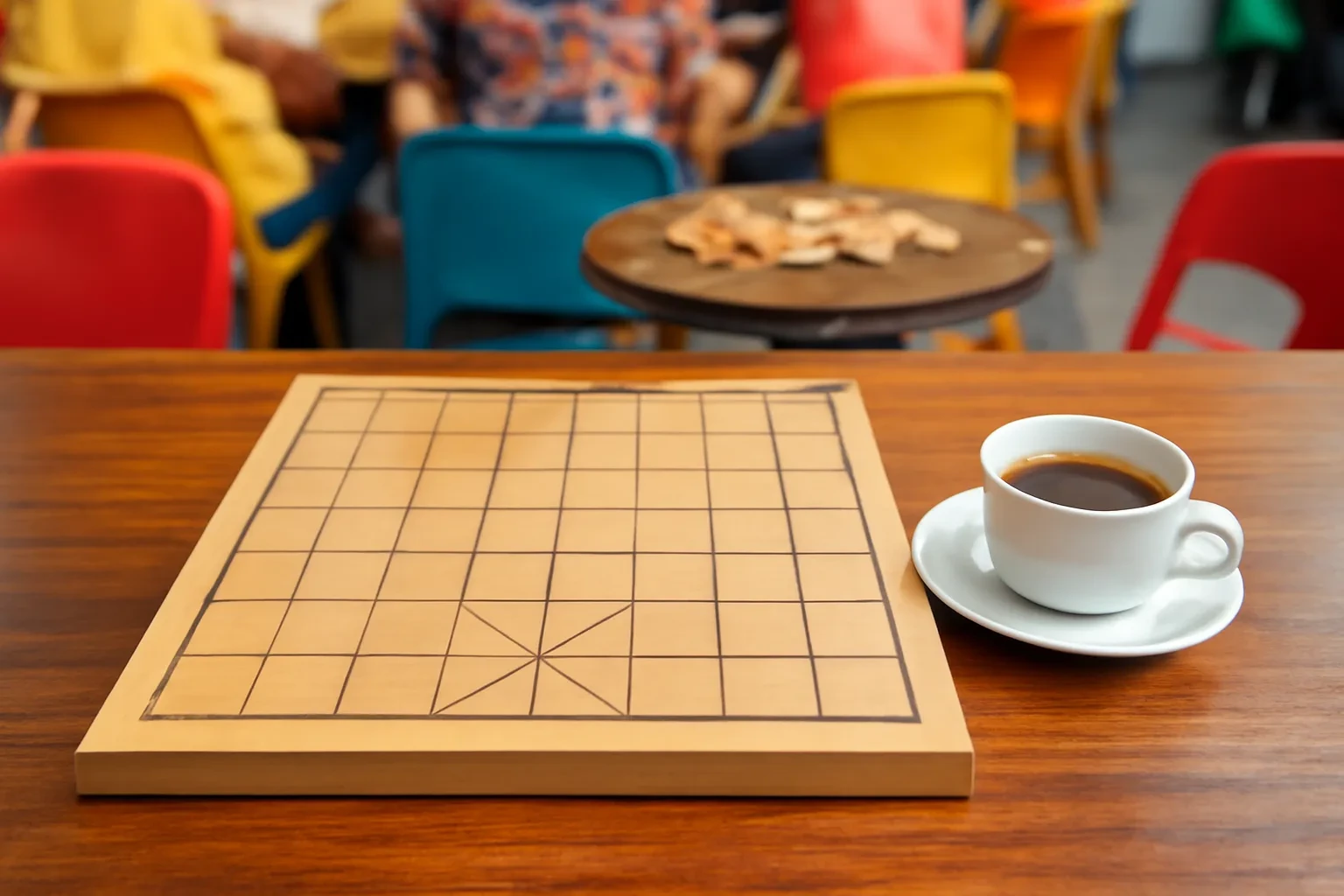
Chess players learn xiangqi quickly, but they lose their first games in remarkably similar ways. The reason is not a lack of skill; it is that a few chess instincts are exactly wrong in xiangqi. Below are the ten traps that catch chess players most often, grouped by the rule behind them, with a short fix for each.
Rules that look familiar but aren't
1. The horse that "jumps"
A chess knight jumps over anything. A xiangqi horse moves one point orthogonally and then one point diagonally, and if a piece stands on that first point — the horse leg — the move is impossible. Chess players plan horse manoeuvres that the rules simply do not allow, or assume their horse is protecting a point it cannot reach.
Fix: before relying on a horse, trace its path point by point. The leg point must be empty.
2. The elephant that behaves like a bishop
The elephant moves exactly two points diagonally, cannot cross the river, and is blocked if a piece stands on the midpoint (the "elephant eye"). It is a defender, not a long-range attacker.
Fix: think of your elephants as part of your palace defence. They can only ever stand on seven points.
3. The pawn that should promote
Soldiers never promote. A soldier that reaches the last rank can only move sideways and is weaker than a soldier one rank behind it.
Fix: stop your soldiers one rank short of the enemy back rank unless pushing gives immediate mate. See soldier endgames.
The cannon
4. "The line is open, so I am safe"
A cannon needs exactly one piece between itself and its target. An open line from an enemy cannon to your general is harmless; a line with one piece on it is check. Chess players often move a piece into a cannon's line to "block" it — and in doing so, create the screen that lets the cannon capture or check.
Fix: count the pieces on every line from each enemy cannon to your general and your chariots, every move. See the cannon explained.
5. Removing the second screen
The mirror image of trap 4: two pieces stand between an enemy cannon and your general, and you move one of them away. Now the cannon has exactly one screen, and you are in check — or you have just made an illegal move.
Fix: treat pieces on a cannon's line as pinned until you have counted.
The generals
6. Walking onto the enemy general's file
The two generals may not face each other on an open file. Chess players, used to kings that can go anywhere, often plan an escape onto the one file their general cannot use.
Fix: when your general needs a flight square, first look at which file the enemy general is on. See flying general mates.
7. The pinned piece between the generals
If a piece of yours is the only piece standing between the two generals on a file, it cannot move off that file. Chess players count on that piece to defend or capture elsewhere, and find the move is illegal.
Fix: always know which of your pieces stand between the two generals.
8. Waiting for the endgame to use the general
In chess the king joins the fight in the endgame. In xiangqi, the general never leaves the palace — but it controls its whole file from the start. Chess players almost never move the general sideways as an attacking idea, and miss strong moves like K5=4.
Fix: in every position, ask whether a sideways general move would take a useful file away from the enemy general.
Endgame instincts
9. Playing for stalemate
There is no stalemate in xiangqi. A player with no legal move loses. Chess players defending a bad position aim for a stalemate trick and lose; chess players attacking avoid stalemating their opponent and miss the win.
Fix: read stalemate is a loss, and count the defender's legal moves in every endgame.
10. Trading down to win
In chess, trading pieces when ahead is a reliable way to win. In xiangqi, a lone chariot usually cannot beat a full set of advisors and elephants, and a lone cannon cannot even beat a bare general. Chess players who "simplify" often simplify into a draw.
Fix: before trading into an endgame, count the defender's advisors and elephants and make sure you keep enough attacking material. See chariot against defenders.
One more: perpetual check
In chess, a perpetual check is a reliable way to draw. Under the official Asian xiangqi rules, perpetual check is forbidden and the checking side must vary its moves. Casual games and many sites handle this more simply — on this site, a position that repeats three times is scored as a draw — but do not count on perpetual check as a drawing weapon in competition.
How to stop making these mistakes
- Play slow games at first. On the home board, the computer lets you choose an easy level, and the board only lets you make legal moves — so illegal-move traps are caught for you, and you can focus on the others.
- Keep a short checklist in your head for the first weeks: horse legs, cannon screens, generals' files, legal moves left.
- Replay your lost games from your account and label each lost piece with the number of the trap above. Most chess players find that two or three traps cause nearly all their losses.
Why these ten and not others
These traps share one feature: each is a situation where a chess player's reflex produces a move that looks natural and is wrong. Rules that are simply new — the palace, the river — are learned in a game or two. Rules that contradict a chess habit take longer, because the habit fires before you think. That is why a written checklist helps so much in the first weeks.
Frequently asked questions
What is the most common mistake chess players make in xiangqi?
Misjudging the cannon: either ignoring it because the line looks open, or blocking its line and giving it a screen.
Can a horse be blocked?
Yes. If any piece stands on the point next to the horse in the direction it wants to move, that move is impossible.
Can my general stand on the same file as the enemy general?
Only if at least one piece stands between them.
Is perpetual check a draw in xiangqi?
Not under official Asian rules, where perpetual check is forbidden for the checking side. On this site, a threefold repetition is scored as a draw to keep things simple.
How many games does it take to stop making these mistakes?
Most chess players stop making the rule-based mistakes within a week or two of regular play. The cannon counting habit takes a little longer to become automatic.