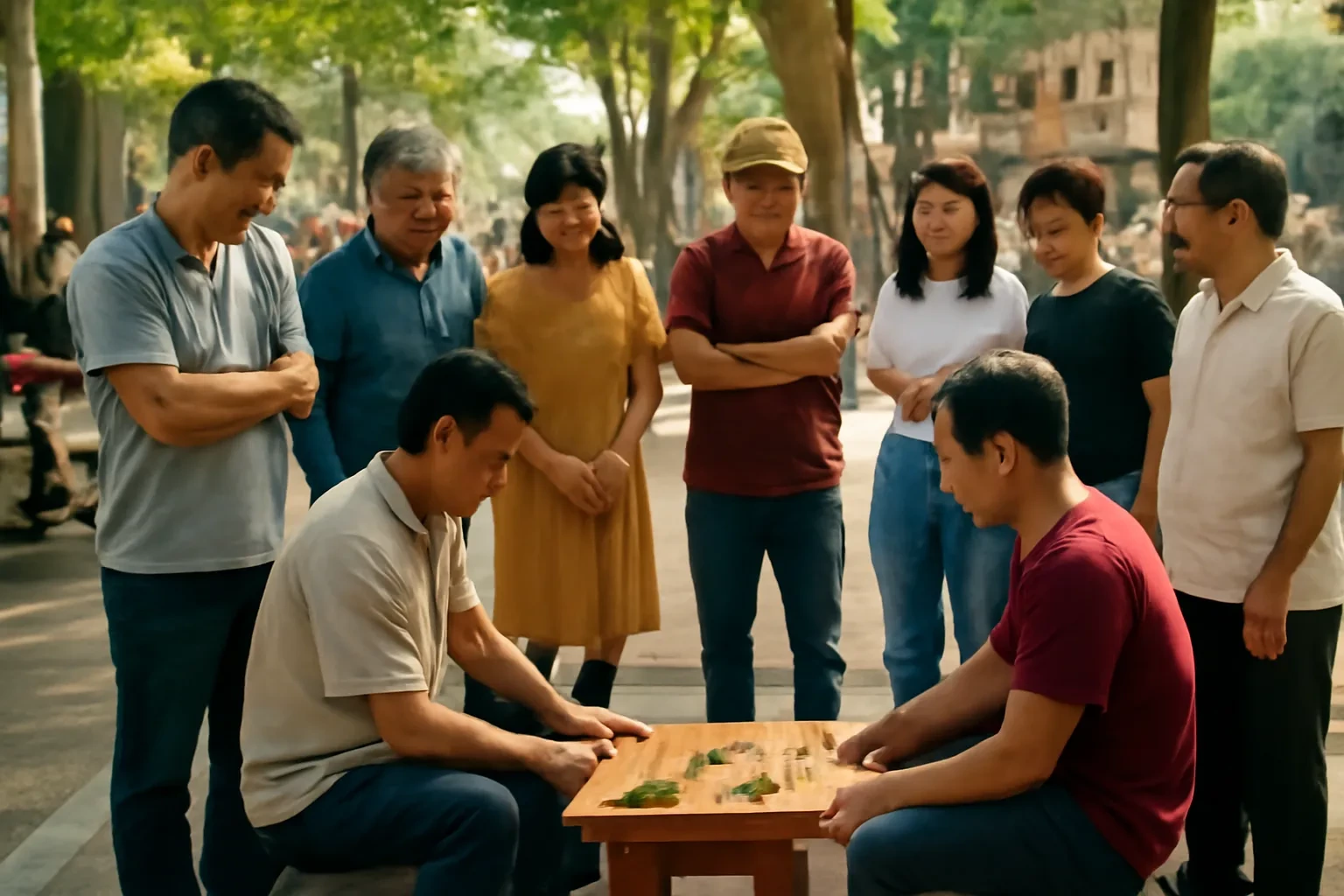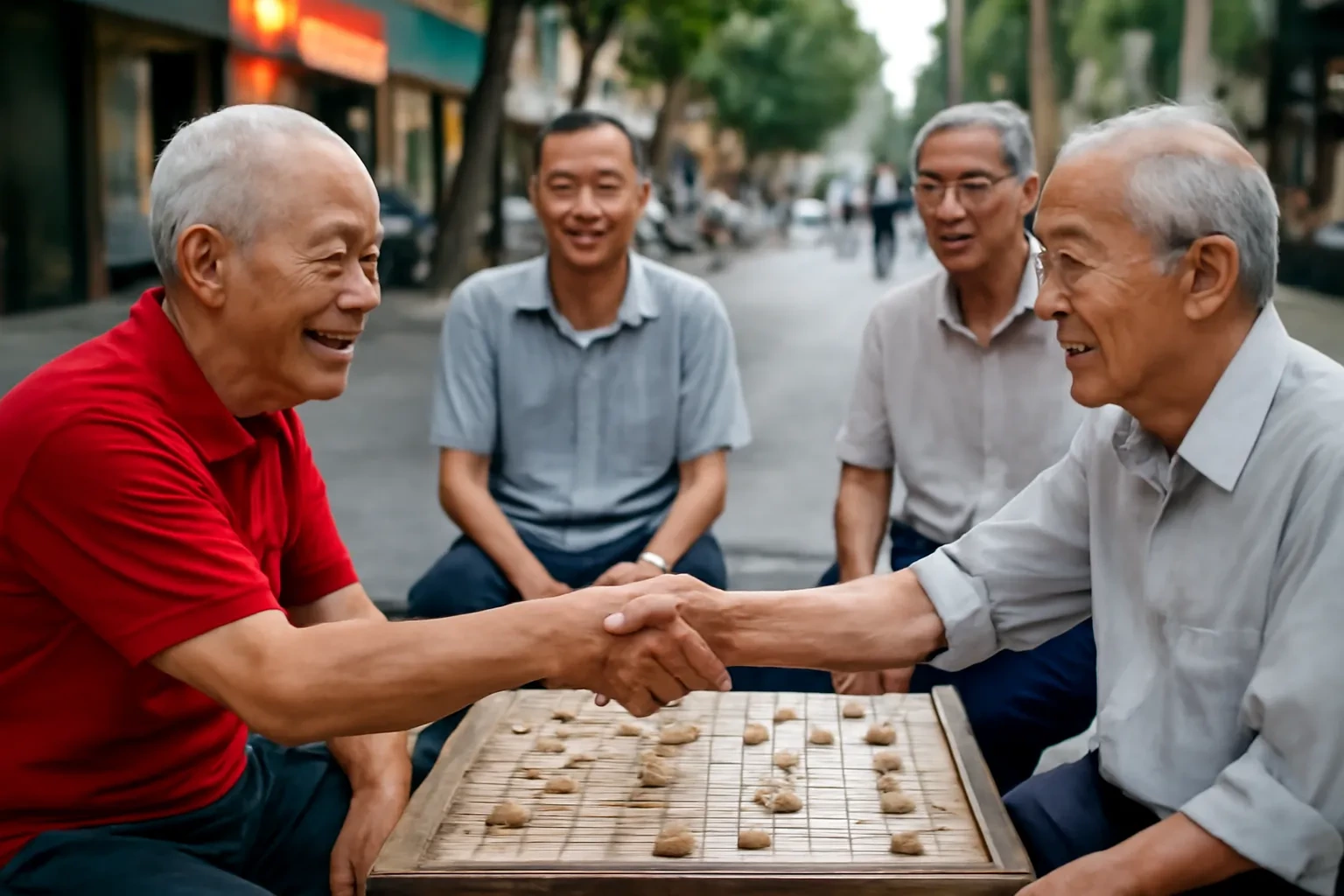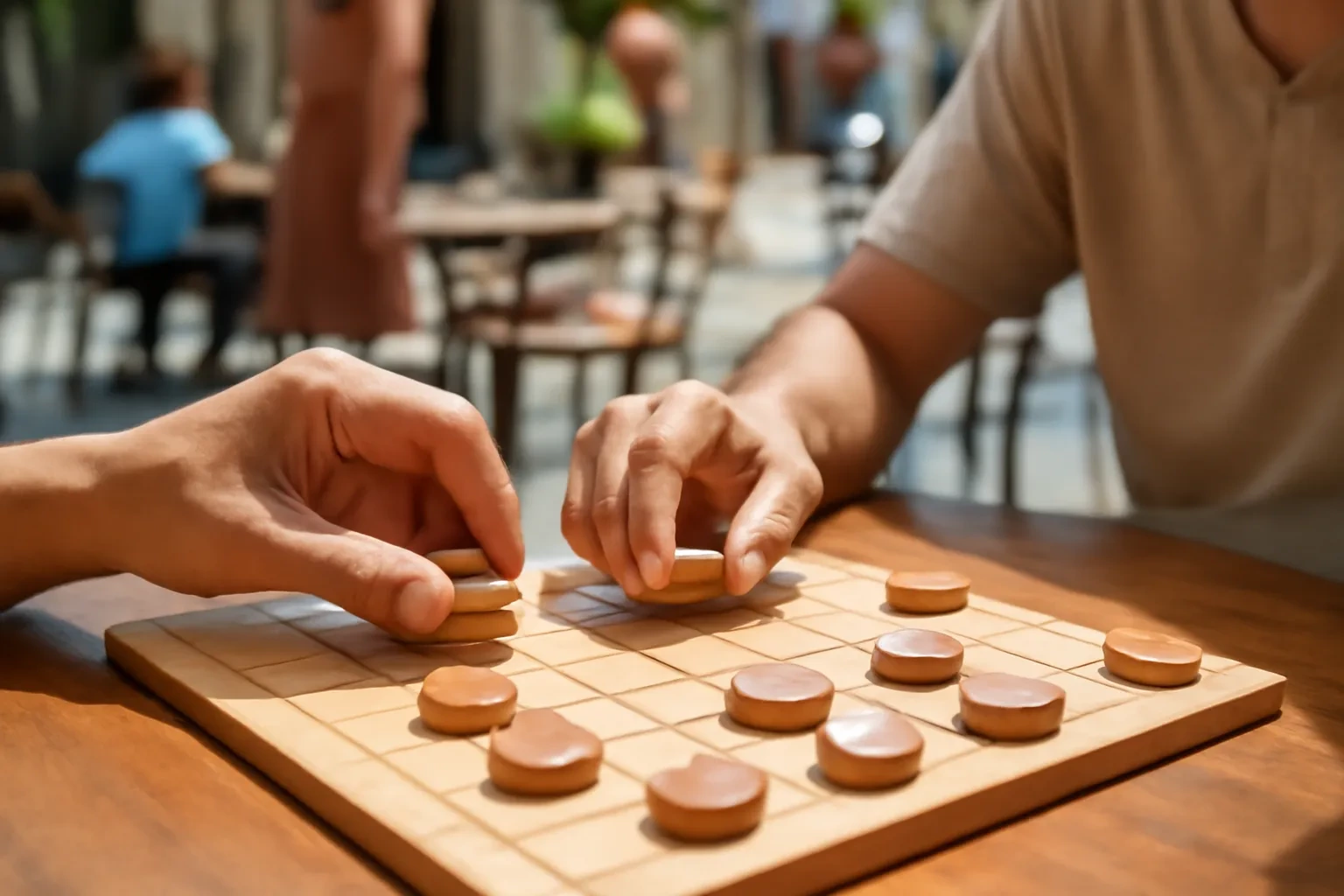
If you play xiangqi long enough with the same friends, the openings start to repeat. Vietnamese players have a popular answer to that: cờ úp, literally "face-down chess". Almost every piece starts face down and shuffled, so the piece standing on the chariot's starting point might be a soldier, and the one on a soldier's point might be a chariot. Every move reveals a surprise, and no two games are alike.
The same idea is known in Chinese as jieqi, "revealing chess". In Vietnam it is played casually everywhere, and its rules are passed on by word of mouth — which means there are a few common house-rule variations. This article gives the most widespread version and flags the points you should agree on before playing.
Setting up
- The generals stay face up, on their usual points in the middle of each palace.
- The other fifteen pieces of each side — two advisors, two elephants, two horses, two chariots, two cannons and five soldiers — are turned face down and mixed.
- The face-down pieces are placed at random on the fifteen usual starting points of those pieces.
The board looks exactly like the normal starting position, but nobody — not even the owner — knows which piece is which.
How face-down pieces move
This is the central rule:
A face-down piece moves according to the piece that normally starts on the point where it stands.
So a face-down piece on a chariot's starting point moves like a chariot; one on a horse's point moves like a horse, and is blocked at the leg like a horse; one on a soldier's point moves like a soldier; one on a cannon's point moves like a cannon and needs a screen to capture.
After its first move, the piece is turned face up. From then on, it moves according to what it really is.
The consequence is delightful: every face-down piece "borrows" the movement of its starting point exactly once. A face-down piece on a chariot's point can race across the board on its first move — and turn out to be a soldier.
Advisors and elephants after they are revealed
The second big difference from ordinary xiangqi: in the common version, a revealed advisor or elephant may move anywhere on the board. An advisor is not confined to the palace, and an elephant may cross the river. This is necessary, because a piece can be revealed as an advisor far from its palace, and forcing it back would be impossible.
They keep their movement pattern, though: an advisor still moves one point diagonally, and an elephant still moves two points diagonally and is still blocked if its "eye" point is occupied.
The general is unchanged: it stays in its palace, and the two generals still may not face each other on an open file.
Soldiers in cờ úp
Soldiers move as usual: one point forward, and sideways as well once they have crossed the river; never backward. One special situation: a face-down piece that makes its first move and is revealed as a soldier already beyond the river can move sideways immediately. A soldier revealed on the opponent's last rank can only move sideways.
Capturing face-down pieces
Face-down pieces can be captured like any other piece. There are two common house rules about what happens next:
- Open capture. The captured piece is turned over for both players to see.
- Hidden capture. Only the capturing player looks at it; the other player never learns what they lost.
The hidden version adds bluffing and memory to the game. Agree on one before you start.
Winning
The usual xiangqi rules apply: you win by checkmating the enemy general or leaving the opponent with no legal move. Rules on repetition and draws follow whatever the players normally use.
Points to agree on before playing
Most arguments in cờ úp come from four questions. Settle them first:
- May revealed advisors and elephants move anywhere? (Common answer: yes.)
- Are captured pieces revealed to both players?
- When a face-down piece on a cannon's point captures on its first move, does it need a screen? (Common answer: yes — it moves and captures exactly like a cannon.)
- May you secretly look at your own face-down pieces? (Common answer: no — nobody knows until the piece is revealed.)
Strategy tips
Cờ úp mixes luck and skill, but skill still wins most games.
- Use the "free" first moves. A face-down piece on a chariot's point gets one chariot move regardless of what it is. Use those long first moves to grab space or make threats while you can.
- Count what is left. Each side has exactly two chariots, two cannons, two horses, two advisors, two elephants and five soldiers. As pieces are revealed, keep track of what could still be hiding. Late in the game, you can often work out what an unrevealed piece must be.
- Don't rely on a single unrevealed defender. A face-down piece guarding your general might turn out to be a soldier that cannot defend at all.
- Revealed advisors and elephants are attackers too. Because they can roam freely, an elephant deep in enemy territory is a real piece in cờ úp.
- Stay calm after bad luck. Revealing a soldier where you hoped for a chariot happens to everyone. The better player adapts.
Why it is good for your ordinary xiangqi
Because the positions are so unusual, cờ úp forces you to calculate from scratch rather than rely on memorised openings. It sharpens your tactical vision — cannon screens, horse legs, the flying general — in positions you have never seen. Many Vietnamese players treat it as relaxed training.
If you want to sharpen the same skills in normal xiangqi, try the checkmate patterns section, or play fast games on /online.
Frequently asked questions
What is cờ úp?
A Vietnamese variant of xiangqi in which all pieces except the generals start face down and shuffled on their usual starting points. Each piece is revealed after its first move.
How does a face-down piece move?
Like the piece that normally starts on its current point. After that first move it is turned face up and moves according to its real identity.
Can advisors and elephants leave their areas in cờ úp?
In the most common version, yes: once revealed, they can go anywhere on the board, while keeping their usual movement pattern.
Is cờ úp mostly luck?
Luck plays a bigger role than in normal xiangqi, but good calculation and keeping track of hidden pieces still decide most games.
Is cờ úp the same as jieqi?
They share the same core idea — face-down pieces revealed after moving. Details vary between Vietnamese house rules and Chinese versions.