A xiangqi game can end in several ways, and one of them catches almost every chess player by surprise: running out of legal moves is a loss, not a draw. This article collects all the endings in one place so that nothing surprises you in your own games.
1. Checkmate
The main goal is the same as in chess. You checkmate the enemy general when it is in check and no legal move gets it out of check. Remember the three ways to answer a check:
- move the general to a safe point inside the palace,
- capture the checking piece,
- block the line of the check.
With a cannon check there are two extra defenses: remove the screen (move the piece the cannon is jumping over) or add a second piece between the cannon and the general. Two pieces in the line mean the cannon cannot capture.
2. No legal move — a loss, not a draw
In chess, a player with no legal move who is not in check is stalemated, and the game is drawn. In xiangqi that player loses. The logic is simple: if you cannot move, you cannot continue, and the game treats that as defeat.
This changes endgame thinking completely. Positions that are "stalemate, draw" in chess are simply wins in xiangqi, and a defender cannot bail out by walling in his own general. It also means you should count the defender's legal moves, not only checks, when you look for a finish.
3. Resignation
Most games between experienced players end with one side resigning — conceding because the result is clear. On this site the Resign button does exactly that. Resigning is considered polite when the position is hopeless; there is no need to play on to mate against a clearly stronger position.
For children and beginners, playing positions out is a good habit, because the other side may still make a mistake — and because learning to finish a won game is a skill of its own.
4. Draw by agreement
Players may agree to a draw at any time. In online play you offer a draw with a button and your opponent accepts or declines. Making a move instead of answering counts as declining.
5. Draw because neither side can win
If neither side has enough attacking material to force checkmate, the game is a draw. Which material is "enough" in xiangqi is a large topic: a lone chariot usually wins against a bare general, but a single horse or cannon against advisors and elephants usually does not. Endgame knowledge matters here.
For simplicity, this site's computer and online games declare a draw when neither side has any attacking piece left — no chariot, horse, cannon or soldier on either side. Other positions are played out.
6. Time
In timed games each player has a clock. If your time runs out, you lose. The online games on this site use increments (for example 5+3: five minutes, plus three seconds added after each move), so a player who moves steadily rarely loses on time.
7. Repetition — the rule that works differently
This is the most complicated part of xiangqi rules, and the one that varies most between rule sets.
In chess, a position repeated three times is a draw. In xiangqi tournament rules, some kinds of repetition are forbidden, and the side responsible must change its move or lose:
- Perpetual check. One side checks again and again while the other escapes. The checking side must deviate.
- Perpetual chase. One side keeps attacking an unprotected piece forever. This is usually forbidden too.
- If both sides are doing forbidden things, or neither is, the repetition is a draw.
The official rules include many special cases — what counts as a chase, which pieces may be chased, how a general's attack is treated — and different organizations have slightly different versions. In casual games, players usually just agree that endless repetition is a draw, or that the checking side must stop.
On this site the computer and online games use a simple rule: a position repeated three times is a draw. That keeps games fair for players who have never studied the formal rules. The formal ideas are explained in perpetual check and chase rules.
Why the "no-move loss" rule matters so much
It is worth coming back to ending number 2, because it changes play at every level:
- In attack you can win without check. Squeeze the general until it has no moves and wait for the defender's last spare moves to run out.
- In defense you must keep a spare move available. Advisors and elephants that can shuffle back and forth are valuable in endgames for exactly this reason.
- Tempo matters. Many endgames come down to who runs out of useful waiting moves first.
A checklist for the end of a game
When a game gets close to the finish, ask:
- Is anyone in check, and can they escape?
- If not in check, does the side to move have any legal move?
- Does either side still have attacking material?
- Is the same position coming back? Who is checking or chasing?
- How much time is left?
Ending a game well: etiquette
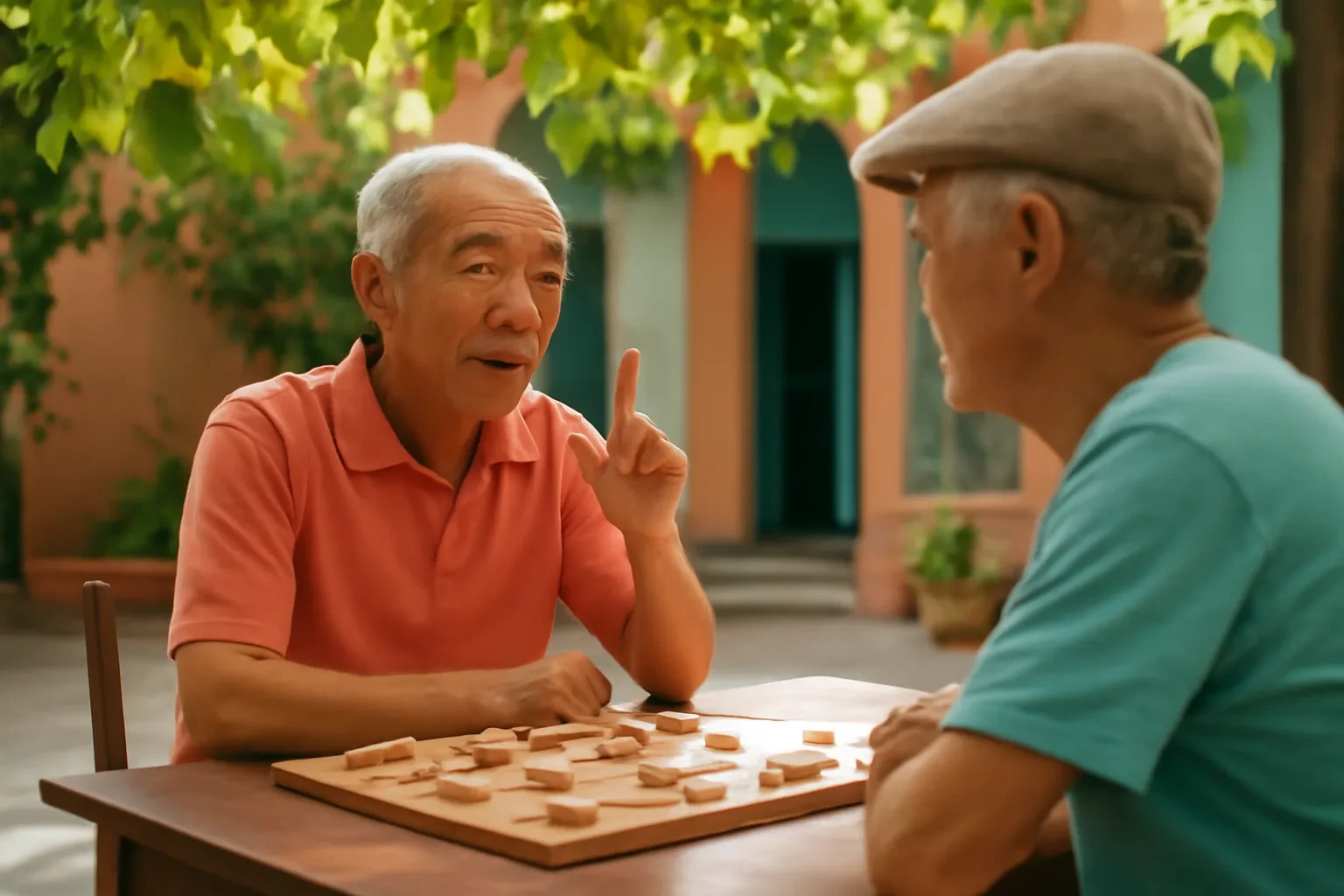
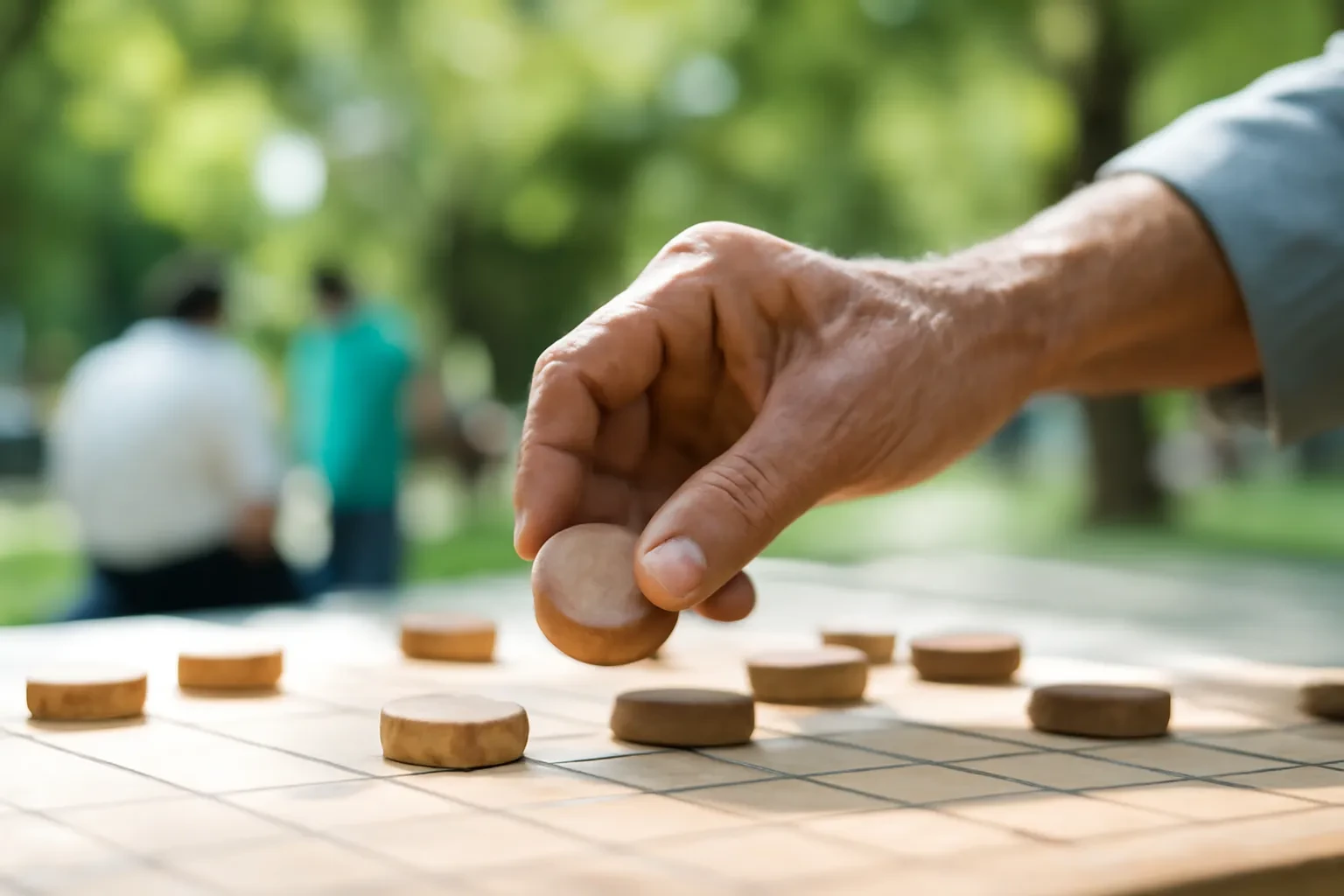
How a game ends matters socially too, especially in Vietnam, where xiangqi is played in public with spectators leaning over the players' shoulders.
- Resign clearly. Say so, or press the Resign button online. Knocking the general over or sweeping the pieces is considered rude in many places.
- Do not play on for time in a dead lost position in a friendly game. It is legal, but it spoils the mood.
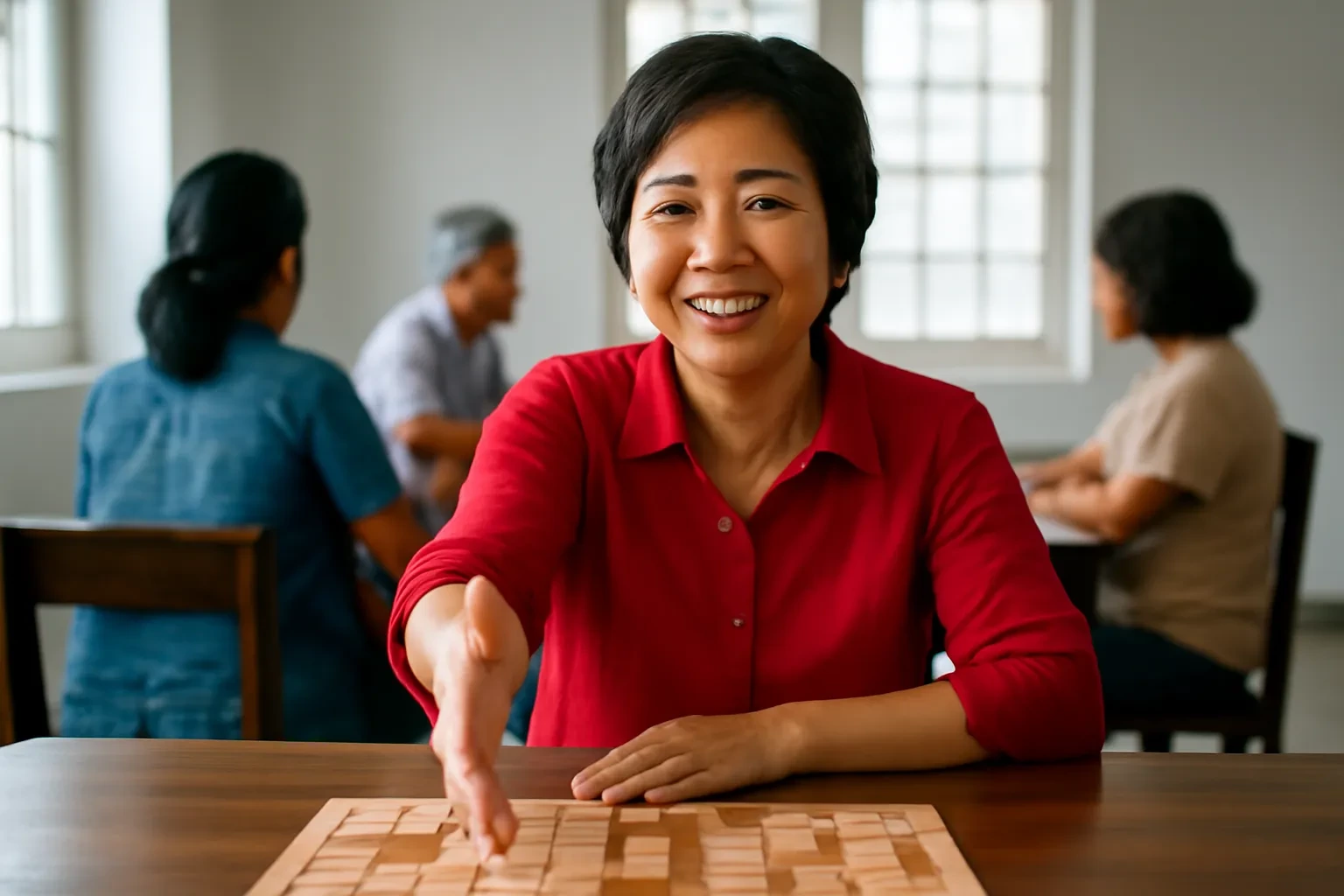
- Offer a hand or a nod after the game. A short "good game" costs nothing.
- Accept spectators' comments calmly. Park games often come with advice from the crowd. Etiquette says onlookers should stay quiet during play; reality is noisier. Smile and keep thinking.
Online, the same spirit applies: do not leave a game in the middle to make your opponent wait for the disconnect timer. If you must go, resign. On this site the Leave button does exactly that after the first moves, and cancels the game with no result if neither side has moved yet.
Frequently asked questions
Is stalemate a draw in xiangqi?
No. If it is your turn and you have no legal move, you lose, even if your general is not in check.
Is a threefold repetition always a draw?
Not in formal xiangqi rules: perpetual check and perpetual chase by one side are forbidden. In casual play and on this site, a threefold repetition is scored as a draw.
Can I lose on time if my opponent has only a general left?
Rules differ between events. On this site, running out of time loses the game.
What is the most common way games end between beginners?
Checkmate after a tactical mistake, usually involving a cannon or a chariot landing next to the palace. As players improve, resignation becomes more common.
Where can I practice finishing games?
Play the computer on the home page and try to convert every winning position into a mate or a no-move win, instead of resigning or offering a draw. More rules are in the rules section.