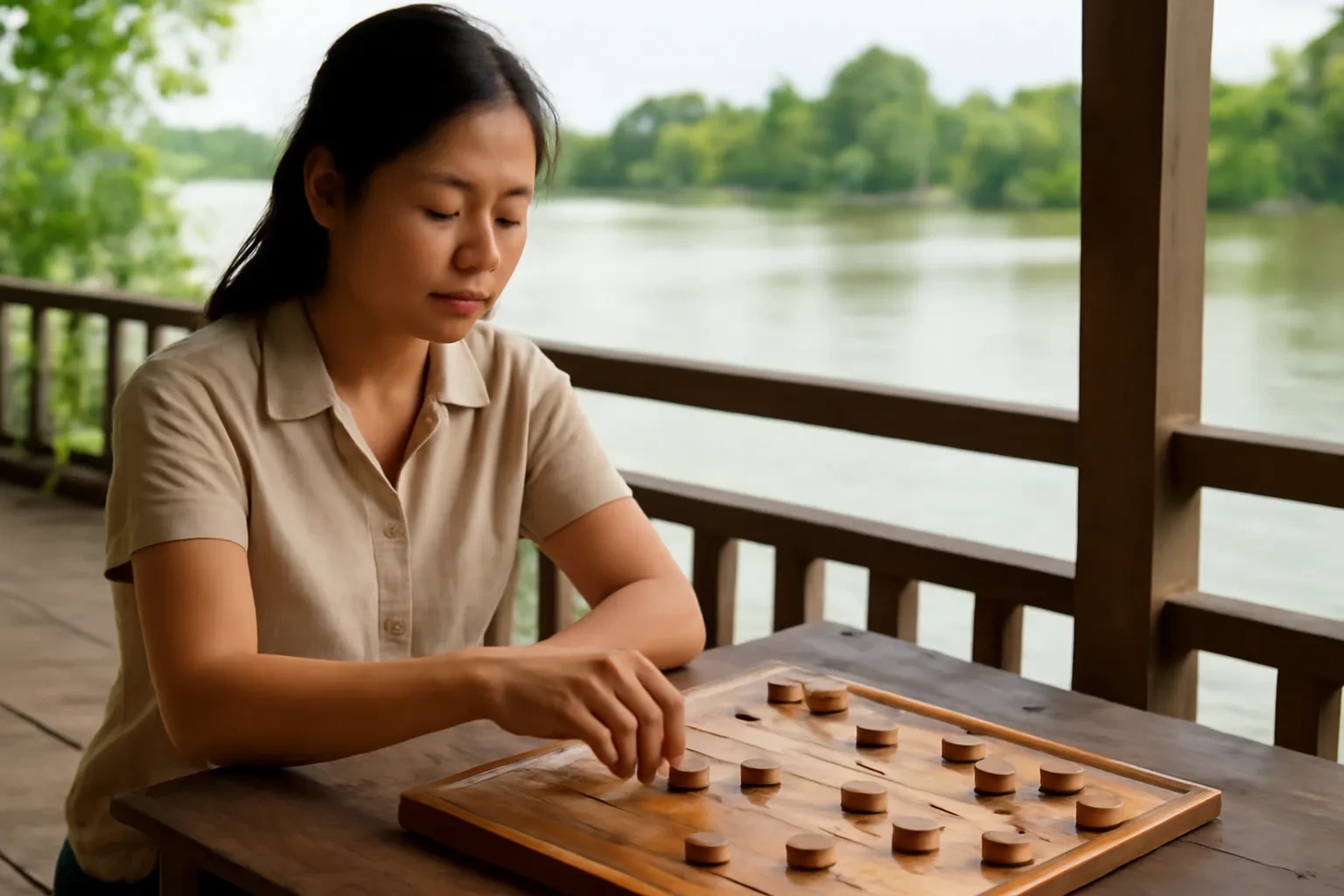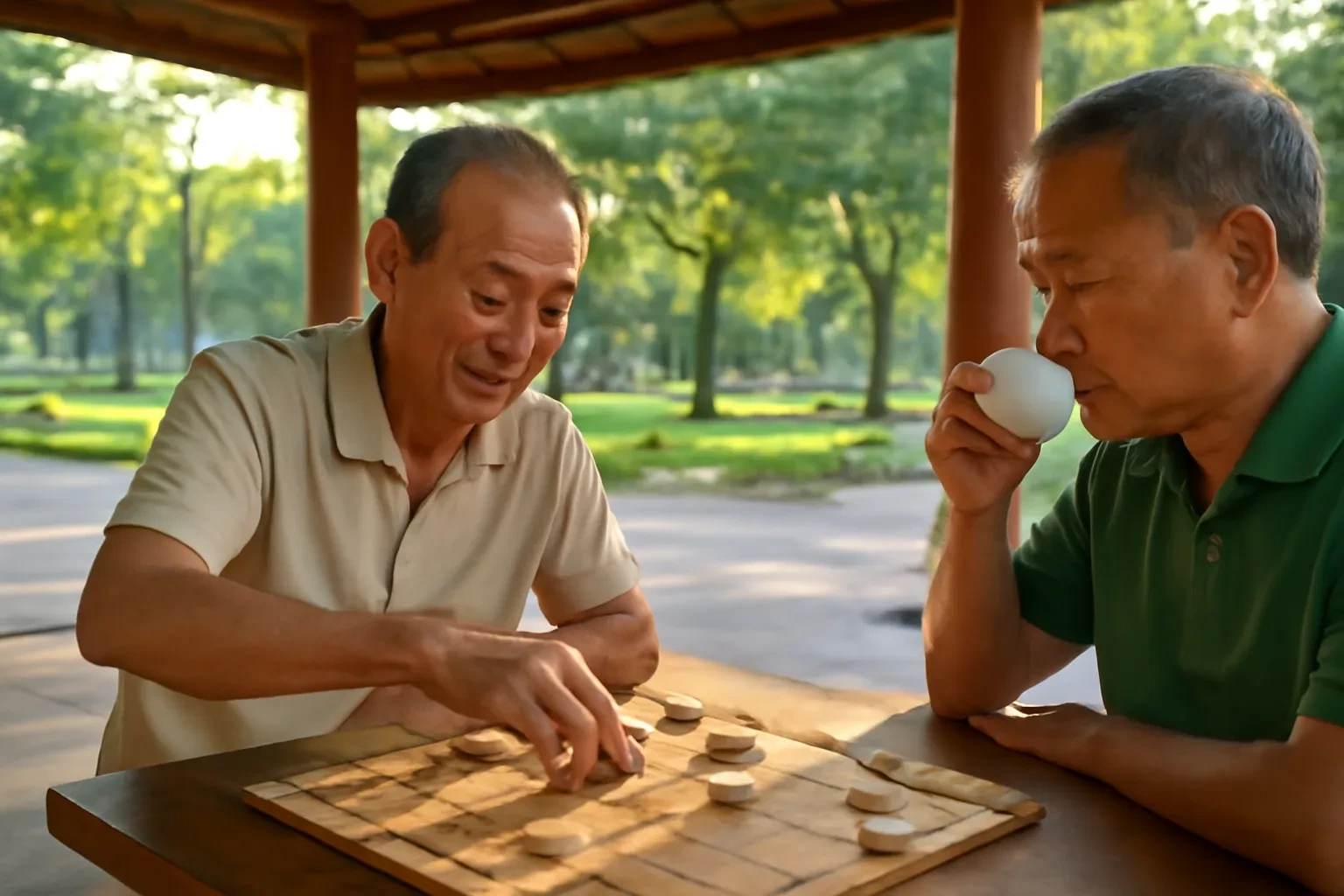
If you watch ten casual xiangqi games in a park in Hanoi or Saigon, several of them will start with the same move: the red cannon slides from its home to the center file. C2=5 — in Vietnamese Pháo đầu, "the head cannon" — is the most popular first move in xiangqi, and for good reason. It is aggressive, easy to understand and full of traps for a careless opponent.
This article explains what the Central Cannon attacks, how Black usually answers, which plans follow, and what beginners get wrong with both colors.
The move and its idea
At the start, Red's cannons stand on files 2 and 8 of the third line. C2=5 moves the right-hand cannon sideways to the center file (file 5). It could just as well be C8=5; the ideas are the same and the choice depends on which side you want to develop afterwards.
What does the cannon do there?
- It threatens the black center soldier. Between the cannon and that soldier stands exactly one piece — Red's own center soldier — which acts as the screen. If Black does nothing, C5+4 captures the center soldier.
- It aims at the black general. Everything on the center file between the cannon and the black general becomes uncomfortable. As pieces move, the cannon can suddenly give check or pin a piece.
- It frees Red's development. With the cannon off file 2, the horse and chariot on that side can come out quickly.
Why capturing the center soldier is not always good
Beginners with Red often play C5+4 at the first opportunity. Sometimes that wins a soldier for free. Often it does not: once the cannon has captured, it stands deep in Black's half with no screen in front of the black general, it can be attacked by horses, and Red has spent two moves while Black develops. The capture is good when it is safe and when Black cannot punish the cannon with tempo; otherwise development comes first.
Black's main replies
1. Screen Horses: H8+7 and H2+3
The most classical answer is to defend the center soldier with a horse: H8+7 (or H2+3). The horse now protects the center soldier, so C5+4 would lose the cannon for a soldier. Black usually brings out the second horse soon, forming the Screen Horses (Bình phong Mã): two horses side by side protecting the center. It is solid, flexible and one of the most studied systems in xiangqi. See the Screen Horses defense.
2. Same Direction Cannons: C8=5
Black answers the central cannon with its own central cannon from the same side of the board. Both sides now have a cannon aimed down the center file. This leads to sharp, tactical play. See Same and Opposite Direction Cannons.
3. Opposite Direction Cannons: C2=5
Black puts its other cannon in the center. The structure is similar but the imbalance is different, since the cannons come from opposite sides. Also covered in the article linked above.
4. Other replies
Black can also answer with an elephant move to the center, a quick horse and chariot development on one side, or soldier moves. These are playable but less common in everyday play.
Red's typical plans after C2=5
After the first move, Red usually follows a small set of plans. Knowing them makes the opening feel much less random.
Develop both horses
H2+3 and H8+7 bring the horses to the third line, protect Red's own center soldier and prepare the chariots. With the horses out, the chariots can reach open files.
Bring out a chariot early
After H2+3, the chariot can slide to file 2 with R1=2, standing on the file behind the horse and ready to come up the board. Many strong central-cannon systems aim to get a chariot to an active post quickly: on the river bank, crossing the river to press on Black's position, or on a file where it attacks Black's horse or cannon.
Put pressure on the center and a wing
The central cannon keeps Black's center pieces pinned to their defensive duties. Red then looks for a second target: a black horse that cannot easily retreat, a chariot that has not come out, or a weakness on one wing. Many attacks combine the central cannon with a chariot and a horse on one side.
What Black should aim for
Black's goals mirror Red's:
- Defend the center soldier with a horse early.
- Develop the chariots; do not leave them in the corners.
- Avoid pinning yourself on the center file. Every black piece standing between the red cannon and the black general is a potential liability.
- Counterattack. Passive defense usually loses. Look for chances to hit Red's chariots or horses with tempo, or to set up your own cannon pressure.
Common beginner traps
Trap 1: The greedy cannon
Red captures the center soldier with the cannon, and Black traps the cannon with horses and a chariot, winning it for a soldier. Lesson: capture only when the cannon can retreat safely.
Trap 2: The pinned center
Black puts two pieces on the center file in front of the general. Neither can move freely, because if one leaves, the other becomes the screen and the general is in check. Red uses the time to attack elsewhere. Lesson: keep the center file in front of your general clear, or at least be aware of what is pinned.
Trap 3: The forgotten chariot
Either side spends many moves on cannons and soldiers and leaves chariots at home. The opponent's chariots take the open files. Lesson: at least one chariot out by move four or five.
A simple model sequence
A common, calm sequence for learners looks like this:
- C2=5 H8+7
- H2+3 H2+3
- R1=2 R9=8
Both sides have developed horses and one chariot each. Red's cannon is in the center; Black's horses defend. From here, both sides develop the second chariot and look for a plan. Do not memorize this as "theory"; use it as a picture of what healthy development looks like.
Is the Central Cannon good for beginners?
Very. It teaches the most important opening lessons — develop, attack the center, get the chariots out — and it creates clear tactical situations. Many players use it as their main opening for Red for years. For a calmer alternative, try the Pawn opening or the Elephant opening.
Practice
On the home page, play five games as Red starting with C2=5 against the computer. Aim for both horses and a chariot out by move six. Then play five as Black and answer C2=5 with H8+7. You will quickly recognize the recurring patterns. For more, see the openings section.
Frequently asked questions
Is C2=5 better than C8=5?
They are mirror images. The choice depends on which side you want to develop next and on your personal habits.
Should Red capture the center soldier right away?
Only if the cannon is safe afterwards. Usually developing first is stronger.
What is the most solid answer for Black?
Defending the center soldier with a horse and building the Screen Horses setup.
Can Black also play a central cannon?
Yes. That leads to the Same Direction or Opposite Direction Cannons, both sharp and popular.
How long does it take to learn this opening?
The ideas take a few games. Real understanding comes from playing it many times and reviewing the games.